

Everything You Need to Know About Eco-Friendly Packing Supplies
Reading Time: 10 minutesTable of Contents
As the world becomes increasingly aware of environmental issues, more people are seeking eco-friendly packing materials and sustainable moving supplies to reduce their ecological footprint. This shift towards green practices is not only beneficial for the planet but can also provide a healthier and safer moving experience for you and your family. In this comprehensive guide, we will explore the various types of environmentally friendly packing materials, their benefits, and how you can incorporate them into your next move.

Why Choose Eco-Friendly Packing Materials?
Environmental Impact
Traditional packing materials, such as plastic wrap and Styrofoam, are not biodegradable and contribute significantly to landfill waste and ocean pollution. By choosing biodegradable packaging options and recycled packing materials, you help reduce the amount of non-degradable waste that harms our planet. These sustainable options often use less energy to produce and can be recycled or composted, further reducing their environmental impact.
Health Benefits
Many conventional packing materials contain harmful chemicals that can negatively affect your health. For instance, Styrofoam contains polystyrene, which has been linked to various health issues. Eco-friendly packing materials, on the other hand, are often made from natural, non-toxic substances, making them safer for you and your family during the move.
Cost-Effectiveness
While some sustainable moving supplies may initially seem more expensive, they can actually save you money in the long run. For example, using durable, reusable packing supplies means you won’t have to purchase new materials for every move. Additionally, many green packing materials are designed to be more efficient, reducing the amount of material needed and thus lowering overall costs.
Types of Eco-Friendly Packing Materials
Recycled Cardboard Boxes
Recycled packing materials such as cardboard boxes are a staple in eco-friendly moving. These boxes are made from recycled paper, reducing the need for new raw materials and the energy required to produce them. When sourcing cardboard boxes, look for those that have a high percentage of post-consumer recycled content. Additionally, these boxes can be recycled again after use, completing the sustainability loop.
Biodegradable Packing Peanuts
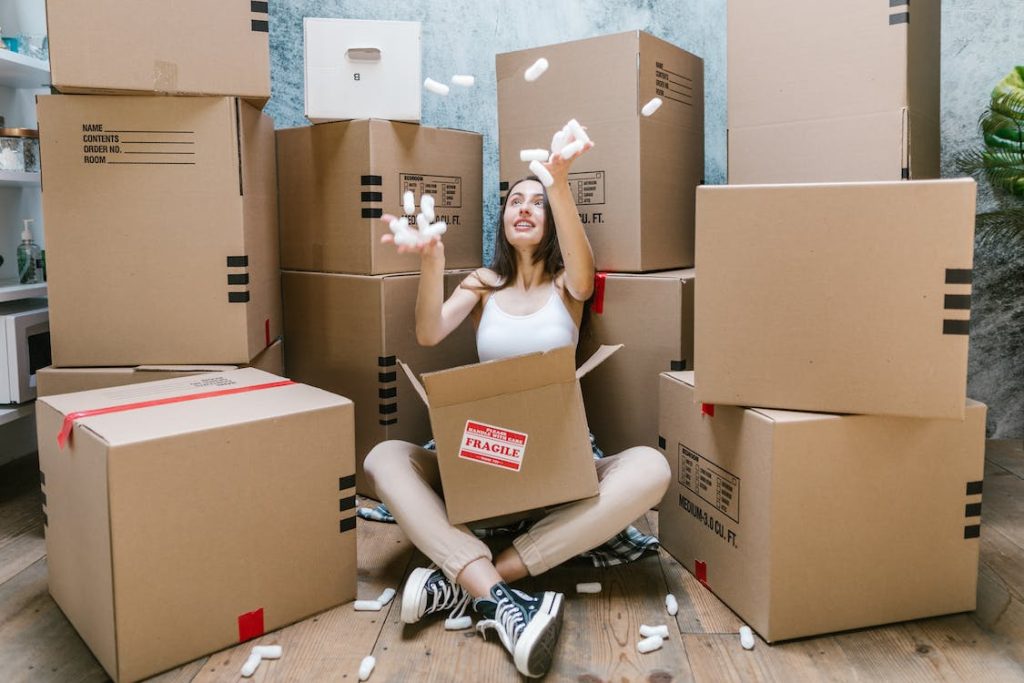
Traditional packing peanuts are made from polystyrene, which is not biodegradable. Biodegradable packing peanuts, however, are made from natural materials like cornstarch or wheat. They dissolve in water, leaving no toxic residue, and provide the same level of protection as their non-eco-friendly counterparts. This makes them an excellent choice for cushioning fragile items without harming the environment.
Reusable Plastic Bins
Another excellent option for sustainable moving supplies is reusable plastic bins. These bins are incredibly durable and can be used multiple times, reducing the need for single-use packing materials. After your move, they can be repurposed for storage or future relocations. Additionally, they often come with secure lids, which provide extra protection for your belongings.
Eco-Friendly Bubble Wrap
Environmentally friendly packing materials also include eco-friendly bubble wrap, which is typically made from recycled polyethylene or biodegradable materials. This type of bubble wrap provides the same cushioning effect but breaks down more easily after disposal. It’s perfect for protecting fragile items such as glassware, electronics, and artwork during transit.
Packing Paper and Newsprint
Using packing paper and newsprint is a great way to protect your items without relying on plastic materials. These can be recycled after use, making them a sustainable choice. Additionally, using newspaper you already have at home can save money and reduce waste. Packing paper is particularly useful for wrapping delicate items and filling empty spaces in boxes to prevent shifting.
Cloth Wraps and Towels
For a zero-waste option, consider using cloth wraps and towels to protect your fragile items. This method, inspired by the Japanese technique of furoshiki, uses fabric to wrap and cushion belongings. It’s a great way to repurpose items you already own and eliminates the need for disposable packing materials. Cloth wraps are ideal for wrapping dishes, vases, and other breakable items.
Benefits of Sustainable Moving Supplies
Reducing Carbon Footprint
Using eco-friendly packing materials helps reduce your carbon footprint. The production of traditional packing materials often involves high levels of carbon emissions. In contrast, sustainable materials are designed to minimize environmental impact, from production to disposal. By choosing these materials, you are contributing to a reduction in greenhouse gases and helping to combat climate change.
Supporting Green Businesses
By choosing sustainable moving supplies, you support businesses that prioritize environmental responsibility. This encourages more companies to adopt green practices, leading to broader environmental benefits. Additionally, many green businesses are local, which can reduce the carbon footprint associated with transportation. Supporting local businesses also helps strengthen the local economy.
Enhancing Your Green Credentials
Using environmentally friendly packing materials can enhance your personal or business green credentials. For businesses, this demonstrates a commitment to sustainability, which can be appealing to eco-conscious customers. For individuals, it reflects a personal commitment to protecting the environment. This can be a significant factor in creating a positive reputation and fostering trust with clients and the community.
Promoting Healthier Living
As mentioned earlier, many traditional packing materials contain harmful chemicals. By opting for eco-friendly packing materials, you can create a healthier living environment during your move. These materials are often free from toxic substances, reducing the risk of exposure to harmful chemicals. This is particularly important for families with young children or individuals with health sensitivities.
How to Source Eco-Friendly Packing Materials
Local Moving Companies
Many local moving companies, including Pasadena Movers, offer green moving tips and eco-friendly packing options. Contacting these companies can provide you with information on where to source sustainable moving supplies and how to use them effectively. Often, these companies have partnerships with suppliers of green materials, allowing you to access high-quality products at competitive prices.
Online Retailers
There are numerous online retailers specializing in environmentally friendly packing materials. Websites such as U-Haul, EcoBox, and even Amazon have sections dedicated to green moving supplies. Ensure you read reviews and verify the eco-credentials of these products before purchasing. Online shopping also allows you to compare prices and find the best deals.
Community Recycling Programs
Community recycling programs often have resources and information on where to find recycled packing materials. Some programs even offer free or discounted materials to encourage sustainable practices. Check with your local waste management or recycling center for more information. They may also provide guidelines on how to recycle your packing materials after the move.
DIY Packing Solutions
Creating your own eco-friendly packing materials can be both fun and sustainable. Reuse old boxes, fabrics, and newspapers to pack your items. Not only does this save money, but it also ensures that you are reusing materials that might otherwise go to waste. DIY solutions are particularly useful for packing smaller, non-fragile items and can add a personal touch to your packing process.
Practical Tips for Using Green Packing Materials
Efficient Packing Techniques
Efficient packing techniques can further enhance the sustainability of your move. Pack items tightly to reduce the number of boxes needed and use padding materials like cloths and towels to fill empty spaces. This minimizes the amount of packing material required and reduces waste. Efficient packing also helps prevent damage to your belongings by reducing movement during transit.
Labeling and Organizing
Proper labeling and organization can make a significant difference in the efficiency of your move. Use recyclable labels and markers to clearly identify the contents of each box. This not only makes unpacking easier but also ensures that materials can be reused or recycled appropriately. Consider using a color-coding system to quickly identify boxes that contain fragile items, essentials, or specific room contents.
Recycling and Disposal
After your move, ensure that you recycle or properly dispose of your eco-friendly packing materials. Many materials, such as cardboard boxes and biodegradable packing peanuts, can be recycled or composted. Check with your local recycling center to understand the best practices for disposing of these materials. Proper disposal helps maintain the sustainability loop and reduces environmental impact.
Case Studies: Successful Green Moves
Eco-Friendly Moves by Pasadena Movers
Pasadena Movers has successfully implemented green moving practices for numerous clients. By offering sustainable moving supplies and educating customers on green moving tips, they have helped many families and businesses reduce their environmental impact during relocations. For example, Pasadena Movers provides reusable plastic bins and biodegradable packing materials, ensuring that each move is as eco-friendly as possible.
Corporate Moves with Green Practices
Several large corporations have also adopted environmentally friendly packing materials for their relocations. Companies like Google and Microsoft have implemented green moving practices, using recycled and biodegradable materials to pack their office supplies and equipment. These efforts not only reduce waste but also promote a culture of sustainability within the organization. Such initiatives often involve detailed planning and collaboration with green moving companies to ensure all aspects of the move are environmentally friendly.
Challenges and Solutions in Green Moving
Common Challenges
Despite the many benefits, there are challenges associated with using eco-friendly packing materials. These can include higher initial costs, limited availability, and the need for more careful packing techniques. However, these challenges can be overcome with proper planning and resourcefulness.
- Higher Costs: While some eco-friendly materials may cost more upfront, consider the long-term savings and environmental benefits.
- Limited Availability: Plan ahead and source materials early to ensure availability.
- Packing Techniques: Take the time to learn efficient packing techniques to maximize the use of green materials.
Solutions
To address the higher costs, consider the long-term savings associated with reusable materials. For limited availability, sourcing materials well in advance and exploring multiple suppliers can help ensure you have what you need. Careful packing techniques can be learned and applied with practice, making the process more efficient over time.
- Cost Savings: Reusable materials save money over multiple moves.
- Advance Planning: Order materials early and from multiple suppliers if necessary.
- Efficient Packing: Use tutorials and tips to learn how to pack effectively with green materials.
Future Trends in Sustainable Moving
Innovations in Eco-Friendly Materials
The future of eco-friendly packing materials is promising, with ongoing innovations aimed at making moving even greener. New materials, such as mushroom-based packing foam and biodegradable plastic alternatives, are being developed to provide sustainable solutions for all types of moving needs. These innovations promise to make sustainable moving supplies even more effective and accessible.
Increased Consumer Awareness
As awareness of environmental issues continues to grow, more consumers are likely to demand environmentally friendly packing materials. This increased demand will encourage more companies to offer green options, making it easier and more affordable for everyone to make sustainable choices.
Regulatory Support
Governments and regulatory bodies are increasingly supporting sustainable practices through legislation and incentives. Policies that promote recycling and the use of biodegradable packaging options can help drive the adoption of green moving supplies. This regulatory support can also help reduce the costs associated with sustainable materials, making them more competitive with traditional options.
Additional Tips for Specific Items
Storing Furniture
Furniture requires special attention when being stored for an extended period. Clean all pieces thoroughly before storing to prevent stains and odors from setting in. Disassemble large items if possible, and keep hardware in labeled bags taped to the corresponding furniture. Cover furniture with blankets or specialized covers to protect against dust and scratches. Avoid using plastic covers, as they can trap moisture and cause mold.
Storing Electronics
Electronics are particularly vulnerable to temperature and humidity changes. Use original packaging if available, as it’s designed to provide the best protection. If not, pack items in sturdy boxes with ample padding. Remove batteries to prevent leakage, and ensure all components are labeled and stored together. Place electronics in the climate-controlled section of your storage unit to avoid damage from environmental fluctuations.
Storing Clothing
Clothing should be cleaned and completely dry before storage to prevent mold and mildew. Use plastic containers or wardrobe boxes to protect items from dust and pests. Place cedar blocks or mothballs inside containers to deter insects. For long-term storage, consider vacuum-sealing items to save space and further protect against moisture.
Storing Documents and Photos
Important documents and photos should be stored in climate-controlled units to prevent deterioration. Use acid-free folders and boxes to store these items, as acidic materials can cause yellowing and brittleness over time. For added protection, digitize documents and photos, keeping digital copies in a secure location. Label and organize files clearly to make retrieval easy.
Addressing Common Storage Challenges
Dealing with Limited Space
If you have limited space in your storage unit, prioritize vertical storage by using shelving units and stacking boxes. Be mindful of weight distribution to prevent stacks from toppling. Use vacuum bags for clothing and linens to reduce volume, and consider renting a larger unit if space becomes too tight to manage efficiently.
Preventing Moisture Damage
Moisture is one of the biggest threats to stored items. Use moisture absorbers, such as silica gel packets, to reduce humidity levels inside boxes and containers. Ensure your storage unit is well-ventilated, and avoid placing items directly on the floor. Regularly check for signs of moisture and take immediate action if you detect any.
Pest Control
Pests can cause significant damage to stored items. To minimize the risk, ensure all items are clean and free of food residues before storing. Use plastic containers with tight-fitting lids to deter pests. Consider using pest repellents or hiring a pest control service to treat your storage unit periodically.
Long-Term Storage Considerations
Preparing for Extended Storage
When storing items for an extended period, additional precautions are necessary. Regularly check on your storage unit to ensure conditions remain optimal. Rotate items periodically to prevent settling and damage. Update your inventory list to reflect any changes or additions to your stored items.
Insurance and Liability
Consider obtaining insurance for valuable items stored long-term. Many storage facilities offer insurance options, but you can also check with your homeowner’s or renter’s insurance provider. Understand the terms and coverage limits to ensure your belongings are adequately protected. Keep detailed records and photographs of insured items for claims purposes.
Future Retrieval and Transition
Plan ahead for the retrieval process to make it as smooth as possible. Coordinate with family or friends if you need assistance moving items out of storage. Consider renting a truck or hiring movers for larger loads. Prepare your home in advance to accommodate the items being retrieved, ensuring you have adequate space and organization solutions in place.
By following these detailed guidelines, you can ensure that your belongings are well-protected and organized during temporary storage. Proper preparation, smart packing strategies, and regular maintenance are key to a successful storage experience. Trust Pasadena Movers to provide the support and expertise you need for a seamless storage process. Contact us today to learn more about our storage solutions and how we can assist you with your storage needs.

Conclusion
The use of eco-friendly packing materials and sustainable moving supplies is an important step towards reducing the environmental impact of moving. By choosing biodegradable packaging options and recycled packing materials, you can protect the planet while enjoying a healthier and potentially more cost-effective move. With the right information and resources, incorporating green practices into your move is easier than ever.
Choose Pasadena Movers For Your Next Move
Ready to make your move greener? Contact Pasadena Movers today to learn more about our eco-friendly moving options. Our team is dedicated to providing you with the best green moving tips and sustainable moving supplies to ensure a smooth and environmentally friendly relocation. Call us now for a free consultation and take the first step towards a more sustainable move.
By following this comprehensive guide, you’ll be well-equipped to handle your next move with a focus on sustainability. Whether you’re moving locally or long-distance, choosing eco-friendly packing materials and implementing green moving practices will make a positive impact on the environment. Trust Pasadena Movers to assist you every step of the way, making your storage experience as smooth and hassle-free as poss
